
Weekly Update #2 — Why I Use Stop Losses and How I Size Positions
Hello everyone, and welcome to the second edition of the Market Insights.
I've had a solid start to the journey, the portfolio is up nearly 4% in the first 10 days. The market is now in a modest pullback, which is normal. Volatility is part of the process. The plan hasn’t changed: stay long and position for further upside. The trend is up imo. If Bitcoin breaks below $80,000 I'll consider my thesis wrong , I’ll exit all positions and reassess.
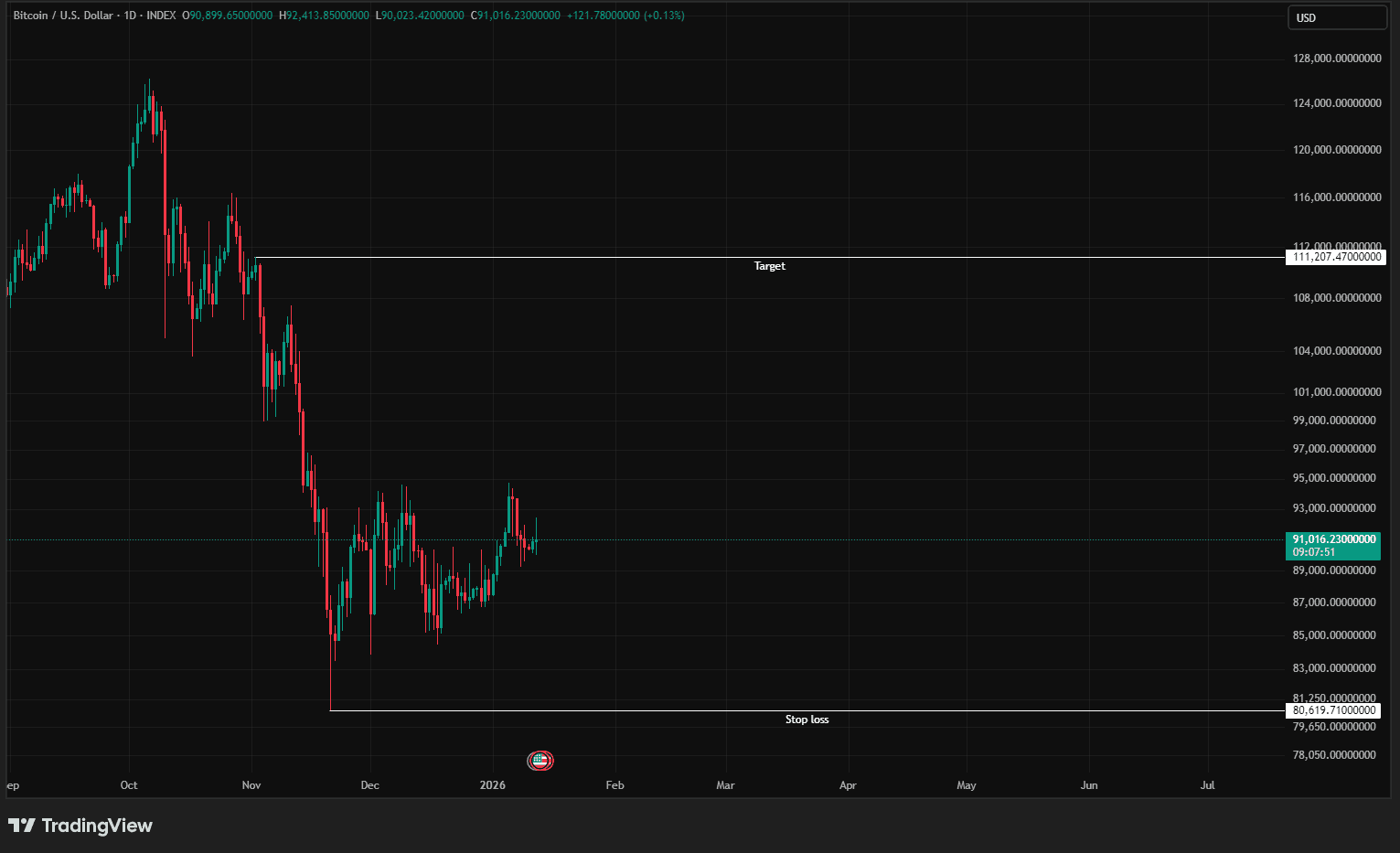
On the macro side, the liquidity theme remains firmly in place and is unlikely to change near term. Gold, precious metals, and equities are all hitting new all-time highs. There are many factors behind this, but the core driver is simple: global liquidity continues to expand. With the U.S. central bank back in expansion mode, U.S. liquidity is shifting from a headwind to a tailwind for risk assets.
Why I Use Stop Losses Instead of Relying on Diversification
Last week, I explained that I was deploying capital and using stop losses, but I didn’t explain why I manage risk that way. In traditional portfolios, investors reduce risk by holding a mix of uncorrelated assets. When one asset falls, another may rise, smoothing returns over time.
That doesn’t work in crypto.
Crypto assets are highly correlated. When the market moves, most coins move in the same direction. We saw that last week: everything went up together and if sentiment flips, everything tends to go down together too.
Because this portfolio is focused purely on crypto, I can’t rely on diversification for protection. Instead, I manage risk by using stop losses.
A stop loss is a predefined level that, if reached, means the idea is invalidated and the trade gets closed. It’s a simple but effective tool. Here’s why I use them:
If the trade is wrong from the start, I want to take a small loss and move on
If the market moves in my favor, I can let it run with more flexibility
Since most assets move together, a wrong directional call can hurt the whole portfolio
Stop losses let me define risk before I enter, not after
If these positions were part of a broader portfolio that also included equities, bonds, or cash, I probably wouldn’t use stop losses the same way. Diversification would handle most of the downside. But that’s not the setup here.
How I Decide Position Sizing
The simplest way to size a position is to know two things:
1. Where the idea is invalidated (your stop loss)
2. How much of your capital you’re willing to risk if you’re wrong
Here’s the formula I use:
Position size = (Portfolio value × Risk per trade) ÷ Stop loss distance
Let’s say:
• Portfolio = $10,000
• You’re willing to risk 1% ($100)
• The stop loss is 10% below entry
Then:
$10,000 × 1% ÷ 10% = $1,000 position size
If the trade is stopped out, the loss is $100, or 1% of the portfolio.
Sizing and stops always work together. A tight stop allows for a larger position. A wider stop means a smaller position.
If you take only one lesson from this journey, let it be this: protecting capital matters more than making money. You can only take advantage of future opportunities if you’re still in the game. Endurance beats brilliance. No strategy works if you’ve already lost the capital needed to use it. Using stop losses here is how I manage risk. Even if I’m wrong on the current positions, I’ve capped risk at 5% total. I’ll still have dry powder to deploy later when a better opportunity presents itself.
Looking Ahead
There are still a few concepts I introduced in Week 1 that I haven’t broken down yet. I’ll get to those in the coming weeks, one at a time.
Here’s what’s coming next (not necessarily in this order):
• Macro: why I’m bullish, and what I’m watching
• On-chain: what I track, and which indicators matter in the short vs long term
• Asset selection: why I picked these names, and how I select assets in general
• Stop levels: how I decide where to place them
• Positioning: when to be aggressive vs conservative
If there’s anything specific you’d like me to dive into, especially around last week’s portfolio, feel free to reach out to me.
Closing Thoughts
I expect more volatility in the weeks ahead, but the framework stays the same: protect downside, let upside work, and adapt only when conditions change.
Have a great week, and as always, stay focused, not reactive.
Trilux
Explore more blogs
Fintech is its potential to promote financial inclusion. In many parts of the world, millions of people lack access to traditional banking services.